When travelers think of Sapa, they usually picture endless rice terraces and misty mountain peaks. But the real heart of Sapa lies in its people – the Sapa tribe communities who have lived on these slopes for generations.
In the photo above, you can see a group of elderly Black Hmong villagers sitting together, laughing, sharing fresh fruit. The woven basket beside them has carried rice, firewood and market goods for a lifetime. The silver earrings and embroidered belts they wear are not costumes for tourists – they are part of their everyday identity.
This is what Sapa Tribe really means: not just a brand name, but real people with real stories.
Who are the Sapa tribes?
Around Sapa town you’ll meet several ethnic groups: • Black Hmong • Red Dao • Tay • Giay
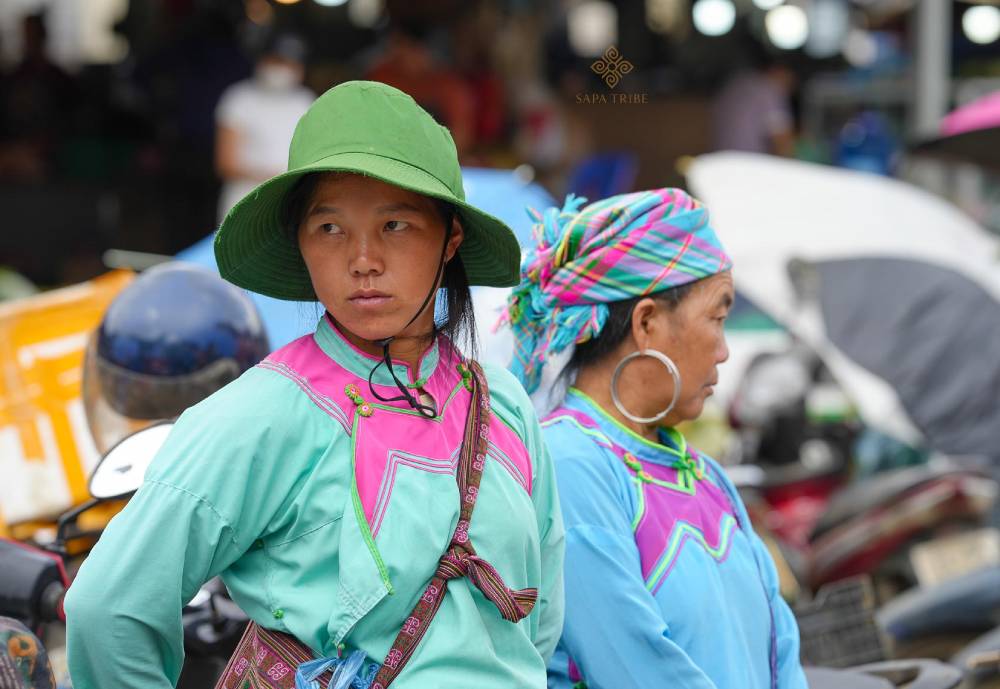
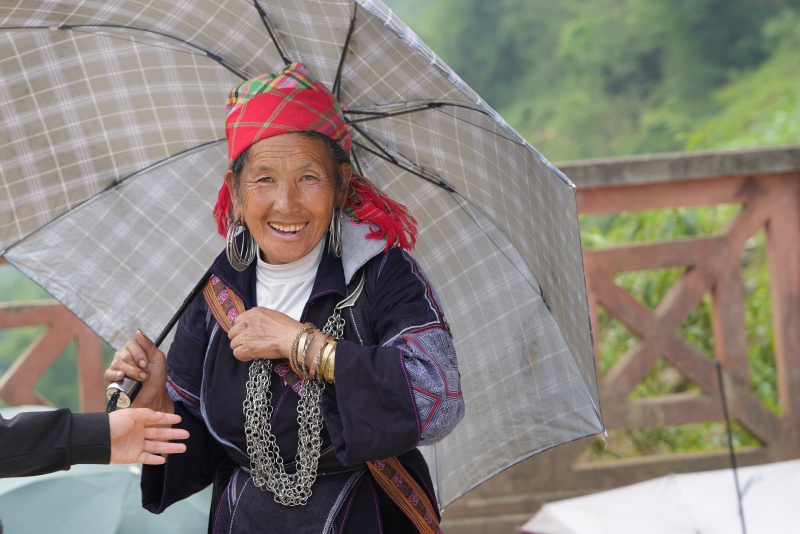
Each group has its own language, traditional dress, beliefs and way of life. The Black Hmong woman in the picture, with her indigo clothes and big silver hoop earrings, represents one of the most recognizable communities in the region.
For visitors, meeting the Sapa tribe people is often the most memorable part of the trip. A simple smile from a grandmother at the market, or a short chat on a village path, can stay in your memory long after the rice fields fade.
Everyday life – more than just a photo opportunity
This moment captured in the photo looks small: a group of elders resting by the wall, sharing lychees, talking and laughing. But it shows a lot about life in Sapa: • Family and community come first. Elders spend time together, catch up on news and look after grandchildren while younger family members work in the fields or guide trekkers. • Baskets are still used every day to carry crops, herbs, wood and handmade products to the market. • Traditional clothing is not just for festivals. Many people still wear hand-embroidered jackets and belts, dyed with natural indigo.
When you slow down and pay attention, you realize that Sapa Tribe is not a postcard image – it is a living culture.
Why visiting with respect matters
Tourism has brought new opportunities to Sapa, but it has also brought challenges. Some visitors treat local people as props for photos, or bargain too hard for handicrafts that took many hours to make.
If you want to connect with the real Sapa tribe, keep a few simple principles in mind: • Ask before taking close-up photos, especially of elders and children. • Pay a fair price for handmade products – this is real income for the family. • Choose trekking tours and homestays that are run by or in partnership with local ethnic families.
Travel done with respect supports education, preserves traditional crafts and gives younger generations a reason to stay in their villages.
Sapa Tribe as a journey, not just a destination
Many travelers come to Sapa for one or two days and only see the main town and a viewpoint. But to truly feel the spirit of Sapa Tribe, you need to walk a little further: • Trek through terraced valleys where smoke rises from small wooden houses. • Share tea with a Hmong or Red Dao family and listen to their stories. • Wake up in a homestay and hear roosters, river sounds and morning greetings in a language you don’t know – yet somehow still understand.
In these quiet, human moments, Sapa stops being just “a place in Vietnam” and starts to feel like a world of its own.
Join the story of Sapa Tribe
The smiling grandmother in the photo has probably seen Sapa change more than anyone can imagine – from isolated mountain villages to one of Vietnam’s most popular trekking destinations. Yet her smile is still warm, her clothes are still handwoven, her basket still ready for another day.
When you visit Sapa, you are not only walking between mountains. You are stepping into the daily life of the Sapa tribe communities who keep this region alive.
Come with curiosity, with respect and with an open heart – and you will leave not just with beautiful photos, but with a real connection to the people of Sapa.

 EN
EN
 English
 Pháp
Pháp
 Đức
Đức
 Tây Ban Nha
 Nga
Nga
 Tiếng Việt